Showing posts with label Non-fiction. Show all posts

Thursday, December 1, 2016

Teens Cook: How to Cook What You Want to Eat, by Megan Carle and Jill Carle

Cover:


Bibliographic Information:
Title: Teens Cook: How to Cook What You Want to Eat
Author: Megan Carle and Jill Carle
ISBN:  978-1580085847
Publisher: Ten Speed Press
Copyright: 2004

Reader’s Annotation:
What is the easiest way for teens to learn to cook?  Follow a cookbook written by teens who cook!


Summary:
This book is a collection of recipes and general cooking tips for teens who may not have much experience with cooking.  The book covers a variety of dishes, including breakfasts, snacks, soups and salads, solo dinners, family meals, and desserts.  The recipes vary in difficulty, from your basic brownies to chicken piccatta.


Critical Evaluation:
The book is written in a traditional “cookbook” style, including lists of ingredients, then instructions for each recipe. The recipes are accompanied by bright, appetizing looking pictures.  As a book simply for reading or browsing, it is well produced, and pleasant to look at.

In terms of the recipes being used for teens to follow, the majority of the recipes are quite basic, and straightforward.  These are good introductory recipes for teens just starting out.  The majority of ingredients are things typically found in most kitchens, or easily found at a local grocery store.  When anything in the ingredients listed is unusually, or needs to be overly specific, this is spelled out quite clearly in the recipe.  This helps insure teens following the recipe will know exactly what to do to make their cooking successful.

There is additional information included in the title, such as kitchen tips, vocabulary, and explanations of the science behind the chemical processes involved.  The writing is very straightforward, and because it is written by actual teens, the tone of the writing is quite engaging.  There are even some stories of kitchen mishaps, which teens will find amusing.

Author Biography:
Megan Carle was a vegetarian throughout her formative cooking years and, as a result, has more ways with pasta than she can count. She is currently a graduate student in Linguistics at Arizona State University.

Megan and Jill's previous books include Teens Cook, Teens Cook Dessert, and College Cooking.

Jill Carle (from author’s Penguin author page)
Jill Carle is an adventurous omnivore with soft spots for ethnic cuisines and all-American comfort food. She is also in graduate school at Arizona State University, studying American Politics.

Megan and Jill’s previous books include Teens Cook, Teens Cook Dessert, and College Cooking.


Genre(s): 
Non-Fiction, Cookbook

Curriculum Ties:
Pennsylvania State Standard - CC.1.2.11-12.L
Read and comprehend literary non-fiction and informational text on grade level, reading independently and proficiently.

Booktalk Ideas:
A discussion on kitchen safety.

A discussion about why it is important to pay attention to nutrition as a teen
          
Reading Level:
Not available

Interest Age: 
12 and up

Challenge Issues: Could be challenged based on encouraging teens to use potentially dangerous kitchen equipment

  If this book were challenged I would:
·         Listen to the concerns of the person raising the challenge
·         Consult the library’s collection development policy
·         Explain how this work meets a library need based on the collection development policy 
·         Consult YALSA’s Dealing with Challenges to Young Adult Materials
·         Consult reviews on VOYA, Amazon, Common Sense Media, and Kirkus
·         Discuss any awards or notable commendations the book received
·         Explain the library’s commitment to intellectual freedom as discussed in the ALA Library Bill of Rights
·         Give the patron the procedure for a formal challenge should they seek to pursue it

Why was this book selected:

Not all teens have opportunities to learn real world skills.  While some teens get to take classes such as home economics, or family and consumer science, this is not always an option for teens.  Similarly, not all teens learn these types of skills within the home.  We frequently see millennials being criticized for not being independent or adult enough, yet we are not equipping them with the skills for independent adult living.  By including books in the library collection that teach real world skills, we are empowering them for their future.  This particular title appealed to me because it was actually written by teens who cook, and features things like basic kitchen tips and safety, as well as explanations of the science behind the cooking processes.

Sunday, November 27, 2016

Mindfulness for Teen Anxiety, by Christopher Willard

Cover:


Bibliographic Information:
Title: Mindfulness for Teen Anxiety
Author: Christopher Willard
ISBN:  978-1608829101
Publisher: Instant Help Books
Copyright: 2014

Reader’s Annotation:
How to recognize anxiety, and tools to overcome it.


Summary:
Anxiety is very common among teenagers.  Whether you have mild anxiety, panic attacks, or chronic anxiety, you are not alone, and there are tools that can help you deal with these very real issues.  This book teaches teens how to recognize anxiety in their own emotional and physical reactions, ways to distract your mind away from anxious thoughts, the concept of mindfulness and how to use it situations to mitigate anxiety.  The book also explores situations that are specific to teens, such as school and social situations, from test taking to prom, and learning how to overcome feelings of anxiety in those specific situations, using simple techniques.

Critical Evaluation:
It is clear that this book was written by a professional, for a teen audience.  The language and examples used are familiar to teens (for example, the anxiety related to dating), without trying to pander too much to teens.  I think the fact that the writing does not use teen slang is a strength; when adults try to sound like what they think teens sound like, it comes across as pandering, and teens will tune it out.  By using straightforward language and real world examples teens face, Willard comes across as a knowledgeable expert, but still gains the trust of teen readers.

This book is written in a workbook format.  That means that in each section, specific information is presented, then exercises are used to put the information into action.  This is a common method in mental health or self-help books, so I think it is used appropriately here.  For example, one chapter of the book focuses on test anxiety.  Information about test anxiety is presented, the reader is asked to reflect on their own experiences with test taking, then a list of coping mechanisms is presented, along an exercise in mindfulness, where the reader counts the sounds they hear in the room before beginning a test.  By presenting information, and following it up with an exercise, these concepts become more concrete in the reader's mind.


Author Biography:
My work as a psychologist has included community mental health centers, hospitals, private clinics, schools and universities.  My first book, Child's Mind was published a few years back, and I recently published a workbook for anxious teens. Meanwhile, I am continuing to write and edit a number of other projects.

Currently, I teach at Lesley University and Harvard Medical School, and work part time in private practice as a therapist with a focus on mindfulness and a specialty in learning issues and anxiety.  I also train teachers, therapists and medical professionals in mindfulness practices through the Institute for Meditation and Psychotherapy, where I serve on the board of directors. In addition, I consult nationally and internationally to organizations and media about educational and psychological issues.  

I am licensed and insured as a psychologist and health services provider in the Commonwealth of Massachusetts, #9151. I received my doctorate from The Massachusetts School of Professional Psychology and bachelor’s degree from Wesleyan University.

On the personal side, I enjoy traveling, hiking, cooking, reading and writing. 

Genre(s): 
Non-fiction, Mental Health

Curriculum Ties:
Pennsylvania State Standard - CC.1.2.11-12.L
Read and comprehend literary non-fiction and informational text on grade level, reading independently and proficiently.

Booktalk Ideas:
A discussion on what are common anxiety triggers teens encounter 

A discussion about mindfulness as a mental health practice, and the benefits of mindfulness
          
Reading Level:
Not available

Interest Age: 
14 and up

Challenge Issues: Could be challenged based concerns that mindfulness may be viewed as a form of alternative medicine or spirituality.

  If this book were challenged I would:
·         Listen to the concerns of the person raising the challenge
·         Consult the library’s collection development policy
·         Explain how this work meets a library need based on the collection development policy 
·         Consult YALSA’s Dealing with Challenges to Young Adult Materials
·         Consult reviews on VOYA, Amazon, Common Sense Media, and Kirkus
·         Discuss any awards or notable commendations the book received
·         Explain the library’s commitment to intellectual freedom as discussed in the ALA Library Bill of Rights
·         Give the patron the procedure for a formal challenge should they seek to pursue it

Why was this book selected:

While teens may not check out non-fiction books as often as they do fiction books, I think it is important that these tools are available for teens, even if they just use them in the library.  As someone who struggled with anxiety since I was a teen, I would have been so happy if I had access to a resource like this at the age of 14.  I chose to include this book in this collection because I think libraries can help reduce mental health stigma, particularly for teens.  A library may be the only safe place a teen has to access this information, so we should make sure to include these types of resources in our collection.

Saturday, November 26, 2016

Hoopla, by Midwest Tape

Database Image:


Bibliographic Information:
Title: Hoopla
Author: Various
Vendor: Midwest Tape


Reader’s Annotation:
Music, movies, and more, with no waitlists.


Summary:
This paid database allows teens to access ebooks, audiobooks, comics, music, television shows, and movies for free as a part of their library membership.  Each user has a limited number of items they can check out per month.  Depending on the item being borrowed, it may be available for streaming, or for downloading on a mobile device.  There are no wait lists, with all patrons having access to each item at any time.

Critical Evaluation:
Because there are six different types of materials available in this database, the setup is somewhat complicated, because each material is in a different area.  However, once you know what material type you are seeking, the process is fairly intuitive.  There are main categories and subcategories allowing users to browse results and narrow them.  You can also filter your results, or search for a specific material.  You can easily switch between material type using a menu at the top of the page.

The setup of the database is visually appealing.  While each page contains a lot of visual information, such as book or album covers depending on what material you are searching, there is ample white space on the page to prevent users from getting overwhelmed.  Similarly, the database seems to be intended for mostly visual browsing.  Very little title information appears on the search results pages.  You can, however, click on a title to get additional information.

One thing I found troublesome is the browsing results pages do not see to display how many total results there are; for example, when browsing documentaries, each page shows 50 items, so the header may say something like “Showing 1-50” but you cannot tell if that is out of 100, 1000, or 51. 


Author Biography:
Not applicable

Genre(s): 
Database, Fiction, Nonfiction, Movies, Series, Comics

Curriculum Ties:
Pennsylvania State Standard CC.1.3.9-10.K
Read and comprehend literary fiction on grade level, reading independently and proficiently.

Booktalk Ideas:
Book talk on a specific title, particularly one where the book and film versions are both available on Hoopla

A general booktalk on how digital resources benefit patrons, the library, and even the environment

          
Reading Level:
Not applicable

Interest Age: 
13 and up

Challenge Issues: Because teens would also have access to "mature" materials  in this database, there could be challenges based on adult language, sexuality or nudity, violence, and substance use represented.

  If this database, or any items it contained, were challenged I would:
·         Listen to the concerns of the person raising the challenge
·         Consult the library’s collection development policy
·         Explain how this work meets a library need based on the collection development policy 
·         Consult YALSA’s Dealing with Challenges to Young Adult Materials
·         Consult reviews on VOYA, Amazon, Common Sense Media, and Kirkus
·         Discuss any awards or notable commendations the book received
·         Explain the library’s commitment to intellectual freedom as discussed in the ALA Library Bill of Rights
·         Give the patron the procedure for a formal challenge should they seek to pursue it

Why was this database selected:


I am including Hoopla as a database because teens are able to access so many additional materials using this database.  The libraries I work at do not have this database as a resource, but another library I belong to does.  I imagine Hoopla is a costly database for libraries, but given the number of different materials available through it, I think it is a worthwhile investment.  Teens can access ebooks, audiobooks, movies, television shows, comics, and music.  Of all those areas, all but music have teen specific categories, making it easier to search for age appropriate materials.  Offering resources such as these allows libraries to stay relevant and competitive in the age of personal technology. 

Thursday, November 24, 2016

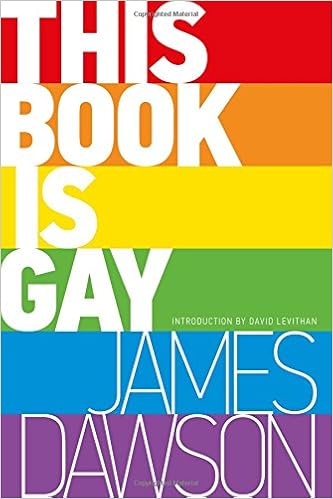
This Book is Gay, by James Dawson (now Juno Dawson)

Cover:


Bibliographic Information:
Title: This Book is Gay
Author: James Dawson (now Juno Dawson).
ISBN:  978-1492617839
Publisher: Sourcebooks Fire
Copyright: 2015

Reader’s Annotation:
As close to a handbook for being LGBT that a teen can get their hands on.


Summary:
What does it mean, exactly, to be LGBTQIA?  This book lays out the specifics behind the most common labels used to describe non-heteronormative sexual and gender identities.  There is a detailed discussion of the biology behind these labels, the coming out process, and the risks LGBTQIA individuals face.  There is a section detailing various types of sexual activities, and giving advice on dating in the LGBTQIA world.  There is also a specific section on how to deal with parents and caregivers, as well as a list of helpful resources.

Critical Evaluation:
One of the greatest strengths of this book is the tone with which it is written.  Dawson does a great job writing with some tongue in cheek humor, using language that is casual as opposed to clinical.  For example, she often uses the word willies as opposed to penises.  This makes the book seem more casual, and much more accessible to teen readers.  There are clinical words used when the gravity of the topic calls for it, however, such as the discussion of various sexually transmitted infections, including HIV.

The book covers information in an incredibly frank way, with no sugar coating.  In a section of various sexual activities, the mechanics of LGBTQIA sex is spelled out in detail.  However, this information is not done in an attempt to be prurient.  The book points out that, from a young age, we are taught the mechanics of heterosexuality, but no one teaches LGBTQIA sexual activities.  There are few resources for this information.  Yes, teens can always seek out the internet, but that information may not be reliable or accurate; it is much better to have the information presented factually, which is what this book does.

Dawson successfully creates an honest, and at times humorous, resource for teens who have questions about sexual preference or gender identity.  The only drawback in the writing is a use of British slang, which may not be as accessible for American teens.

Author Biography:
*note- since the publication of this book, the author has come out as transgender, and has changed her name to reflect her preferred gender.  She is now known as Juno Dawson

Queen of Teen 2014 Juno Dawson is the multi award-winning author of six novels for young adults. In 2016, she authored the best-selling World Book Day title: SPOT THE DIFFERENCE.

Her next novel is the beautiful and emotive MARGOT & ME (Jan 2017) which will be followed by her adult debut, the memoir THE GENDER GAMES (Jul 17).
Juno also wrote the bestselling non-fiction guide to life for young LGBT people, THIS BOOK IS GAY. In 2016 a follow-up, MIND YOUR HEAD, featured everything a young person needs to know about mental health.

Juno is a regular contributor to Attitude Magazine, Glamour Magazine and The Guardian and has contributed to news items on BBC Women’s Hour, Front Row, ITV News, Channel 5 News, This Morning and Newsnight concerning sexuality, identity, literature and education.
Juno’s titles have received rave reviews and have been translated into more than ten languages around the world.

Juno grew up in West Yorkshire, writing imaginary episodes of Doctor Who. She later turned her talent to journalism, interviewing luminaries such as Steps and Atomic Kitten before writing a weekly serial in a Brighton newspaper. In 2015, Juno announced her intention to undergo gender transition and live as a woman.

Juno writes full time and lives in Brighton. In her spare time, she STILL loves Doctor Who and is a keen follower of horror films and connoisseur of pop music. In 2014 Juno became a School Role Model for the charity STONEWALL.

Genre(s): 
Non-Fiction, LGBTQIA

Curriculum Ties:
Pennsylvania State Standard - CC.1.2.11-12.L
Read and comprehend literary non-fiction and informational text on grade level, reading independently and proficiently.

Booktalk Ideas:
A discussion about the difference between sexual preference and gender identity.

A discussion about LGBTQIA resources for teens, both at the local level and the national level
          
Reading Level:
Lexile 1070

Interest Age: 
14 and up

Challenge Issues: Could be challenged based on adult language, and frank discussion of sexuality.

  If this book were challenged I would:
·         Listen to the concerns of the person raising the challenge
·         Consult the library’s collection development policy
·         Explain how this work meets a library need based on the collection development policy 
·         Consult YALSA’s Dealing with Challenges to Young Adult Materials
·         Consult reviews on VOYA, Amazon, Common Sense Media, and Kirkus
·         Discuss any awards or notable commendations the book received
·         Explain the library’s commitment to intellectual freedom as discussed in the ALA Library Bill of Rights
·         Give the patron the procedure for a formal challenge should they seek to pursue it

Why was this book selected:

There is a real lack of good LGBTQIA non-fiction titles out there.  This is one of the better, newer titles.  I was really impressed with the very honest handling of information in the book, including risks that LGBTQIA individuals face, particularly teens.  Sexuality is difficult for many teens to discuss or ask questions about, and this book covers the mechanics of sexual activity for LGBTQIA folks.  As the book points out, we are taught the facts about heterosexual activity from a young age, this is a way to help LGBTQIA teens learn what sex, as well as sexual preference and gender identity, might look like for them.

Monday, November 14, 2016

The Diary of a Young Girl: The Definitive Edition, by Anne Frank

Cover:


Bibliographic Information:
Title: The Diary of a Young Girl: The Definitive Edition
Author: Anne Frank
ISBN:  978-0385480338
Publisher: Anchor Books
Copyright: 1952

Reader’s Annotation:
One girl describes the difficulty of being a teen while in hiding.


Summary:
Anne Frank and her family went into hiding in Amsterdam, as a result of the increasingly stringent and dangerous actions being taken against Jews during World War II.  Anne and her family move into a secret attic space in the annex of the building where her father worked.  In her diary, Anne recounts the hardships of having to live in hiding, and discussed the other people living in the annex with her.  There is also a discussion of how her father’s coworkers assist in keeping the Frank family’s residence a secret.


Critical Evaluation:
Written in the form of a diary, this book now serves as a memoir of one girl’s experience trying to survive during World War II.  While the book is translated from its original language, the text is still in the words of Anne Frank herself, which means we get a firsthand account of what was going on in the world during WWII, as well as the unique experience of the Frank family living in hiding.

One of the notable things about the writing in the book is that it not only discusses the unusual circumstance of the family’s wartime life, it talks about typical, everyday frustrations a teen girl may encounter.  Anne speaks about her relationship with her family members, and voices honest frustration about her relationship with her mother.  Anne also talks about the changes her body undergoes as she matures.  Anne’s writing captures how very lonely she feels, a feeling to which most teen readers will relate.

Author Biography:
Born in the city of Frankfurt, Germany, she lived most of her life in or near Amsterdam, the Netherlands. Born a German national, Frank lost her citizenship in 1941 and thus became stateless. The Frank family moved from Germany to Amsterdam in the early 1930s when the Nazis gained control over Germany. By May 1940, they were trapped in Amsterdam by the German occupation of the Netherlands. As persecutions of the Jewish population increased in July 1942, the family went into hiding in some concealed rooms behind a bookcase in the building where Anne's father worked. In August 1944, the group was betrayed and transported to concentration camps. Anne and her sister, Margot, were eventually transferred to Bergen-Belsen concentration camp, where they died (probably of typhus) in February or March 1945, just weeks before the camp was liberated in April.

Genre(s): 
Non-Fiction, Memoir

Curriculum Ties:
Pennsylvania State Standard - CC.1.2.11-12.L
Read and comprehend literary non-fiction and informational text on grade level, reading independently and proficiently.

Booktalk Ideas:
A discussion on what it means to be a refugee in wartime, and modern examples of refugees

A discussion about the atrocities committed as a part of the Holocaust, not only against Jews but against other groups of people as well.
          
Reading Level:
Lexile 1080

Interest Age: 
12 and up

Challenge Issues: Could be challenged based brief discussion of sexuality, and dark subject matter relating to the Holocaust and war.

  If this book were challenged I would:
·         Listen to the concerns of the person raising the challenge
·         Consult the library’s collection development policy
·         Explain how this work meets a library need based on the collection development policy 
·         Consult YALSA’s Dealing with Challenges to Young Adult Materials
·         Consult reviews on VOYA, Amazon, Common Sense Media, and Kirkus
·         Discuss any awards or notable commendations the book received
·         Explain the library’s commitment to intellectual freedom as discussed in the ALA Library Bill of Rights
·         Give the patron the procedure for a formal challenge should they seek to pursue it

Why was this book selected:

It is important that a well-rounded teen collection contain all types of materials.  While, in general, teens do not check out many non-fiction items, there are some titles that stand out as classics, and this is certainly one of them.  Teens are often quite interested in history, and World War II/the Holocaust seems to be an area of particular interest to teens.  For me personally, I first became fascinated with the Holocaust as a teenager, and then that interest stayed on through my adult life.  I think many teens want to read about the Holocaust in an attempt to understand how such an extreme tragedy could occur.  Anne Frank is one of the most notable victims of the Holocaust, in part because of this book.  Her words offer teen readers a unique first hand account of the hardships of trying to survive the war.  I cannot imagine not having this title as a part of any teen collection.

Sunday, October 23, 2016

Poisoned Apples: Poems for You, My Pretty, by Christine Heppermann

Cover:


Bibliographic Information:
Title: Poisoned Apples: Poems for You, My Pretty
Author: Christine Heppermann
ISBN:  978-0062289575
Publisher: Greenwillow Books
Copyright: 2014

Reader’s Annotation:
Real life does not always have a happy ending


Summary:
Using imagery common to fairy tales, this collection of poetry discusses issues of body image, consent, self harm, and gender norms, among other issues teens face.  Each of the 50 poems is a stand alone work, but the fairy tale theme runs throughout the collection, alluding to stories such as Goldilocks, The Three Little Pigs, and Hansel and Gretel.  

 Critical Evaluation:
Because the poems draw on familiar themes from fairy tales, the writing is engaging to teen readers.  For example, in the poem "The Runaway", Heppermann tackles issues of self identity through the eyes of Goldilocks, discussing how being famous for breaking and stealing things colored the way she sees herself, and her place in society.  By using imagery that is familiar from childhood to explore issues that are common to teens, Heppermann deftly meets teens where they are.

The book has a series of photographs that accompany the poetry, often containing subtle clues to fairy tales and relating to the poem they accompany.  This imagery helps solidify the themes from the poetry.  For example, the poem "Thumbelina's Get-Tiny Cleanse-Tested" tackles issues of societal pressure for teens to have the perfect body, and how this effects they way teens see themselves.  The corresponding image is a giant hand grasping a tiny female, both playing on the Thumbelina theme and the concept of society guiding the actions of young females.

The writing tackles issues not always addressed in teen non-fiction.  Specifically, there are several poems addressing feminism and the rejection of gender norms, and even talking about menstruation.  It is valuable that teens, regardless of gender, see these themes represented in the books they read.

Author Biography:
Christine Heppermann writes fiction, poetry, and criticism. Her books include Poisoned Apples: Poems for You, My Pretty (2014), City Chickens (2012), and Backyard Witch (with Ron Koertge, 2015). She currently reviews young adult books for the Chicago Tribune.

Christine grew up in Omaha, Nebraska, where she attended an all-girls Catholic high school. As an undergraduate she studied philosophy and literature at Trinity University in San Antonio, Texas. She has a masters degree in children's literature from Simmons College in Boston, Massachusetts, and an MFA in writing for children and young adults from Hamline University in St. Paul, Minnesota.

Christine lives in New York's Hudson Valley with her two daughters, two cats, and one husband.

Genre(s): 
Non-fiction, Poetry

Curriculum Ties:
Pennsylvania State Standard - CC.1.2.11-12.L
Read and comprehend literary non-fiction and informational text on grade level, reading independently and proficiently.

Booktalk Ideas:
Discussing sexism in traditional fairy tales.

A discussion about re-writing traditional fairy tale princesses.

          
Reading Level:
Not available

Interest Age: 
14 and up

Challenge Issues: Could be challenged based on adult language, teen sexuality, discussion of eating disorders and self harm.

  If this book were challenged I would:
·         Listen to the concerns of the person raising the challenge
·         Consult the library’s collection development policy
·         Explain how this work meets a library need based on the collection development policy 
·         Consult YALSA’s Dealing with Challenges to Young Adult Materials
·         Consult reviews on VOYA, Amazon, Common Sense Media, and Kirkus
·         Discuss any awards or notable commendations the book received
·         Explain the library’s commitment to intellectual freedom as discussed in the ALA Library Bill of Rights
·         Give the patron the procedure for a formal challenge should they seek to pursue it

Why was this book selected:
Often, teens find poetry, as a reading material, to be boring, and too tied to academics (in other words, they only read poetry when it is assigned in English class).  However, teens are often drawn to writing poetry as a means of exploring their emotions, and dealing with traumas.  By providing teens with collections of poetry that address situations that teens encounter, particularly when written in a theme or style that feels familiar to them (such as fairy tales), libraries can present teens with an opportunity to appreciate poetry and a non-academic manner, and to explore it as an art form.  I have always been fond of writing that sets fairy tales on their heads, since so many fairly tales have been given a slightly misogynistic bias, so this collection really spoke to my inner teenager.